A Biscotto for Every Arrival
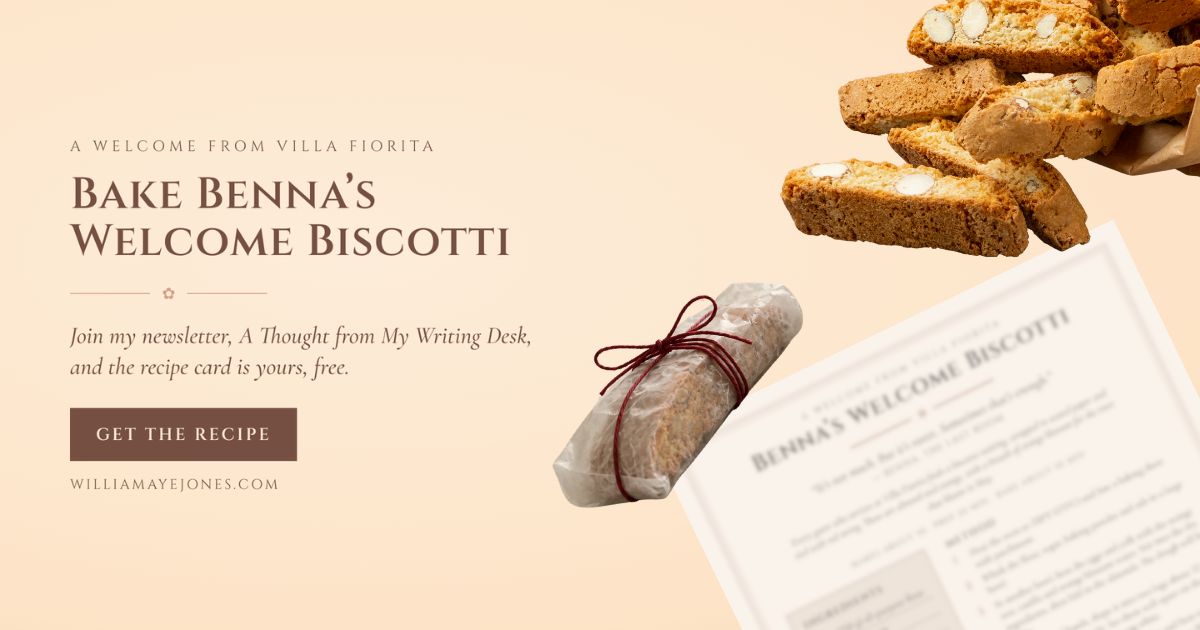
In the first chapter of The Last Room, Lucinda lands in Rome after an overnight flight from Houston. Her driver hands her a note from Benna (Villa Fiorita's caretaker) and a small bundle of waxed paper tied with red string. Inside is a crisp biscotto studded with almonds, with a faint trace of orange. It's my small tribute to cantucci, the twice-baked almond biscuits of Tuscany that the rest of the world calls biscotti.
Lucinda isn't hungry. She takes a bite anyway.
I gave Benna that ritual because few foods say "welcome to Tuscany" as clearly as these crisp almond biscuits, which end so many meals there. They keep for weeks, travel well, and taste of patience: dough mixed, baked, sliced, baked again, until time becomes part of the flavor. I’d enjoyed cantucci many times during my travels in Italy (especially at a charming B&B in Lucca where the lady of the house made the best bruschetta I'd ever tasted), but while I was writing, I found myself wondering where the ritual began. Here's what I found.
What's in a Name
"Biscotto" comes from the Medieval Latin biscoctus, meaning "twice-cooked." The name describes the method. The English word "biscuit" grew from the same root.
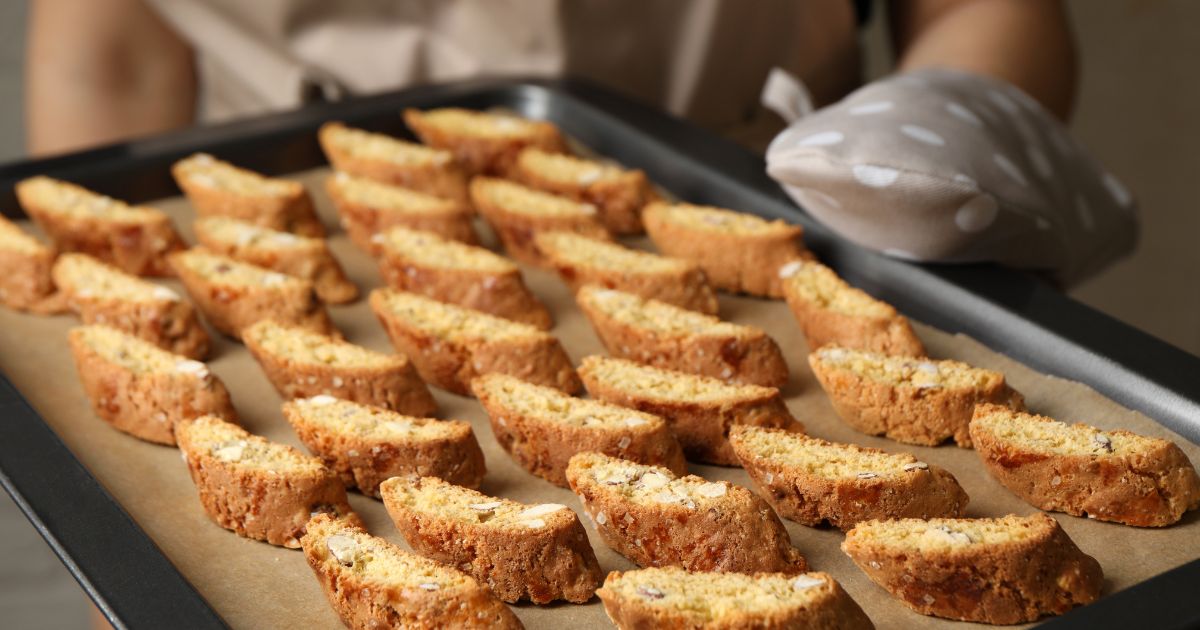
"Cantuccio" has humbler roots. Today it means a corner or nook, but it once meant the crust or heel of a loaf of bread, the crunchy end piece (always my favorite part). Look at a tray of cantucci, each one cut on the diagonal with a crisp edge, and you can see why the name stuck.
In Prato, the Tuscan city where the modern version took shape, they were long known as biscotti di Prato. On most Tuscan menus today, you'll see them called cantucci or cantuccini.
Where Biscotti Came From
Twice-baking began as a way to make food survive a journey. Baking bread a second time drove out the moisture that made it spoil. Twice-baked bread was a staple of the Roman legions, and for centuries afterward travelers and sailors carried versions of it.
Over time, Italian bakers turned that ration into a treat. Sugar, eggs, and nuts made it something to savor. By the eighteenth century, almond biscuits were being recorded in Prato. They were ideal for long trips and for welcoming guests, much like the bundle Benna sends to meet Lucinda at the airport.
A Baker in Prato
The modern story begins in 1858, the Prato baker and pastry chef Antonio Mattei opened a workshop he named "Antonio Mattei, Fabbrica di Pane, Paste, Cantucci, Biscotti e altri generi," a maker of bread, pasta, cantucci, biscuits and other goods.
In Mattei's shop, though, the word "cantucci" meant something else. His cantucci were a rustic biscuit of lightly sweetened bread dough flavored with anise seed. His almond biscuits sold separately as biscotti di Prato. As the almond version grew more popular, it gradually took over the older name.
Mattei's almond recipe was famously plain: flour, sugar, eggs, almonds, and pine nuts, with no butter, oil, or yeast. The almonds went in whole, skins on and unroasted.
Recognition came quickly. His biscuits were honored at the 1861 Italian national exposition in Florence and received a special mention at the 1867 Exposition Universelle in Paris. Pellegrino Artusi, author of the beloved Italian cookbook La scienza in cucina e l'arte di mangiar bene (Science in the Kitchen and the Art of Eating Well), praised Mattei for his honesty and hard work. (Amazingly enough, the book is still in print, and both Italian and English editions are available on Amazon. If you've ever heard me talk about bella figura, the art of putting beauty into every aspect of your life, this is a book to have in your home.)
The Biscottificio Antonio Mattei still bakes in Prato today, run by the Pandolfini family since 1908.
How They're Made
The method has changed very little in more than a century and a half.
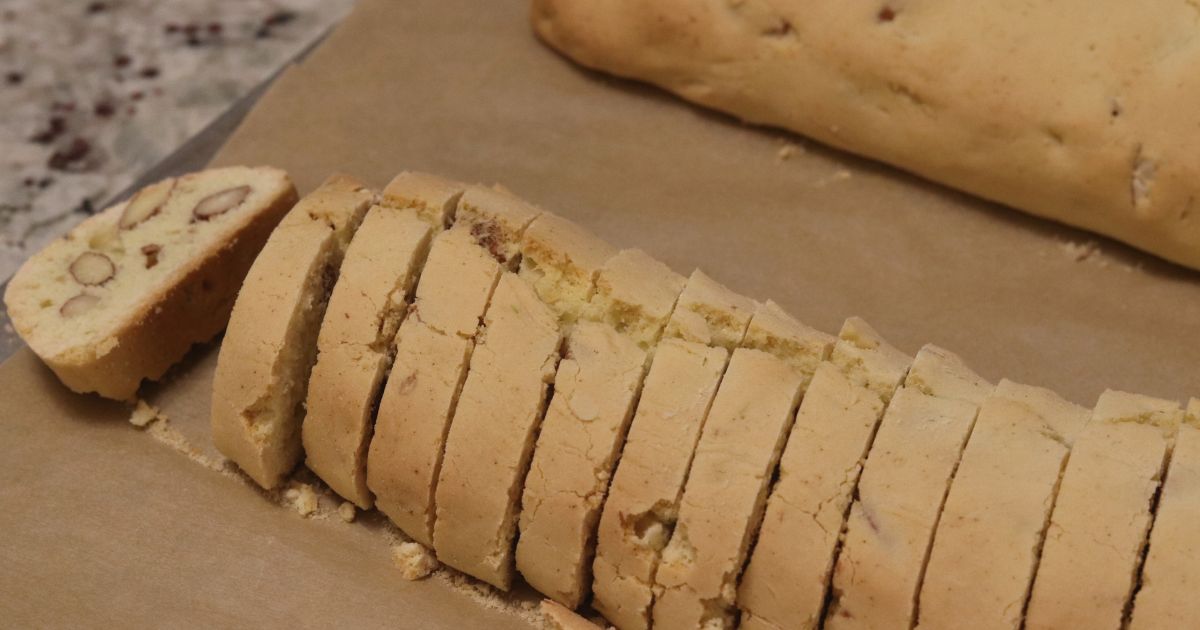
Bakers mix flour and sugar, then work in eggs until a stiff, sticky dough forms. They fold in the almonds, shape the dough into long, flat logs, and bake them until golden and just firm.
Then comes the step that gives cantucci their shape and character. While the logs are still warm, the baker slices them on the diagonal into pieces about a finger wide. Cutting them warm keeps the slices from crumbling, and the angle gives each one its long, elegant oval. The slices go back into the oven to dry until they snap cleanly.
The result has almost no moisture left in it. Many home recipes add a little baking powder, butter, or citrus zest. Purists in Prato will tell you the original needs none of them.
Vin Santo and Variations
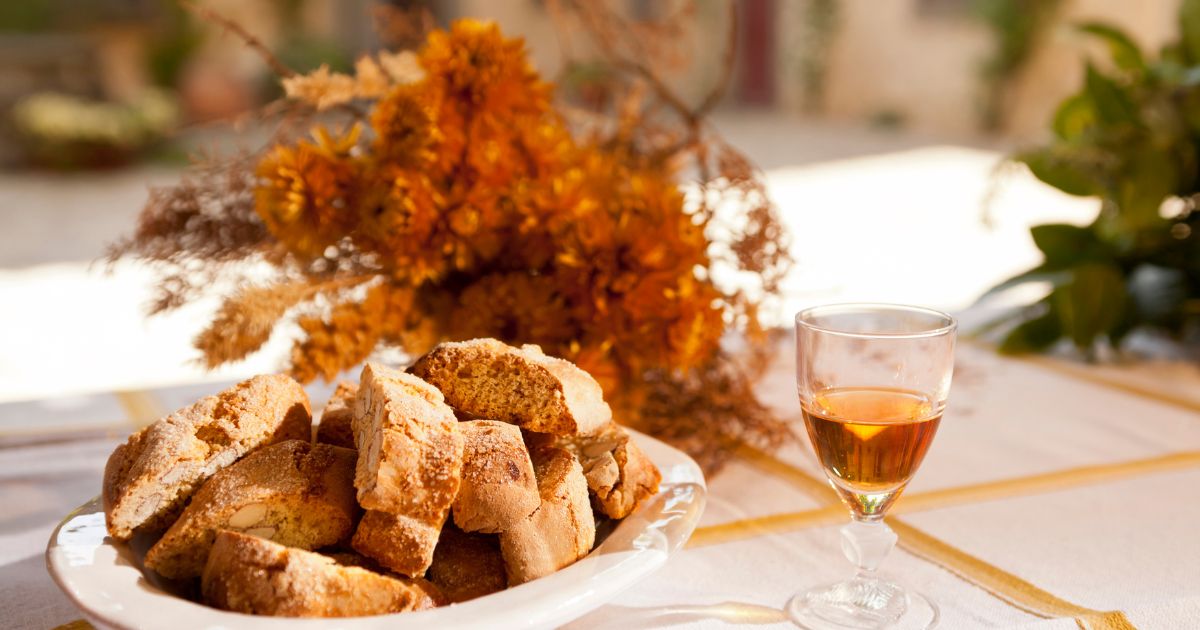
In Tuscany, the classic way to eat cantucci is with Vin Santo, the region's sweet amber dessert wine. Dipping softens the biscuit just enough, and "cantucci e vin santo" closes many a Tuscan dinner.
In January 2016, the European Union gave Cantucci Toscani protected status as an IGP (Indicazione Geografica Protetta, or Protected Geographical Indication). The rules require them to be made in Tuscany from flour, almonds, sugar, eggs, butter, and honey. Each piece can weigh no more than 15 grams (about half an ounce) and measure no more than 10 centimeters (just under four inches). Now perhaps you see why Europe prefers grams and meters: round numbers. The protected recipe includes butter and honey, which Mattei's original left out, so even the official cantuccio isn't quite the one he baked.
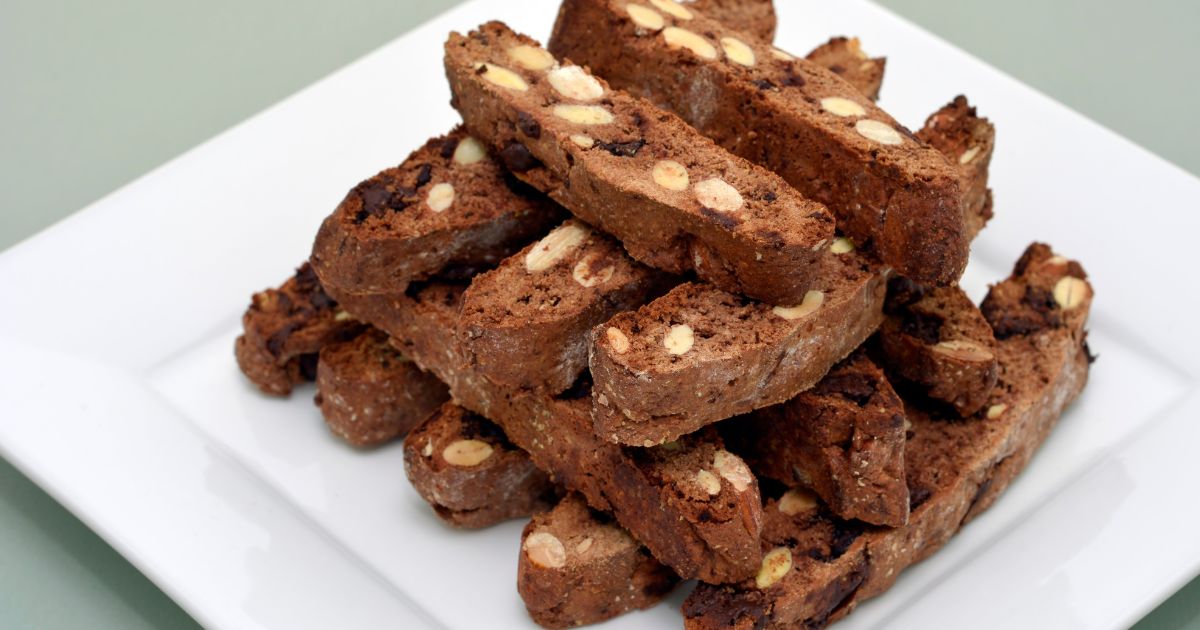
Beyond the official version, you'll find cantucci made with pistachios, hazelnuts, dark chocolate, dried figs, anise, or orange peel. Outside Italy, biscotti often grow larger and richer, made with butter, dipped in chocolate, and served with coffee instead of wine.
Back to the Villa
When I wrote Benna's welcome biscotto, I gave it a hint of orange for the blossoms that follow Lucinda through the book. It felt right that the first thing she tastes in Italy is something made to last: a small, sweet thing built to survive a long journey and arrive whole.
If you'd like to bake Benna's version, I’m sharing the recipe with subscribers to A Thought from My Writing Desk. Join below, and the recipe card is yours. Bake a batch, then pour yourself a little Vin Santo while they cool.
The Last Room, A Villa Fiorita Novella, arrives November 10, 2026.